
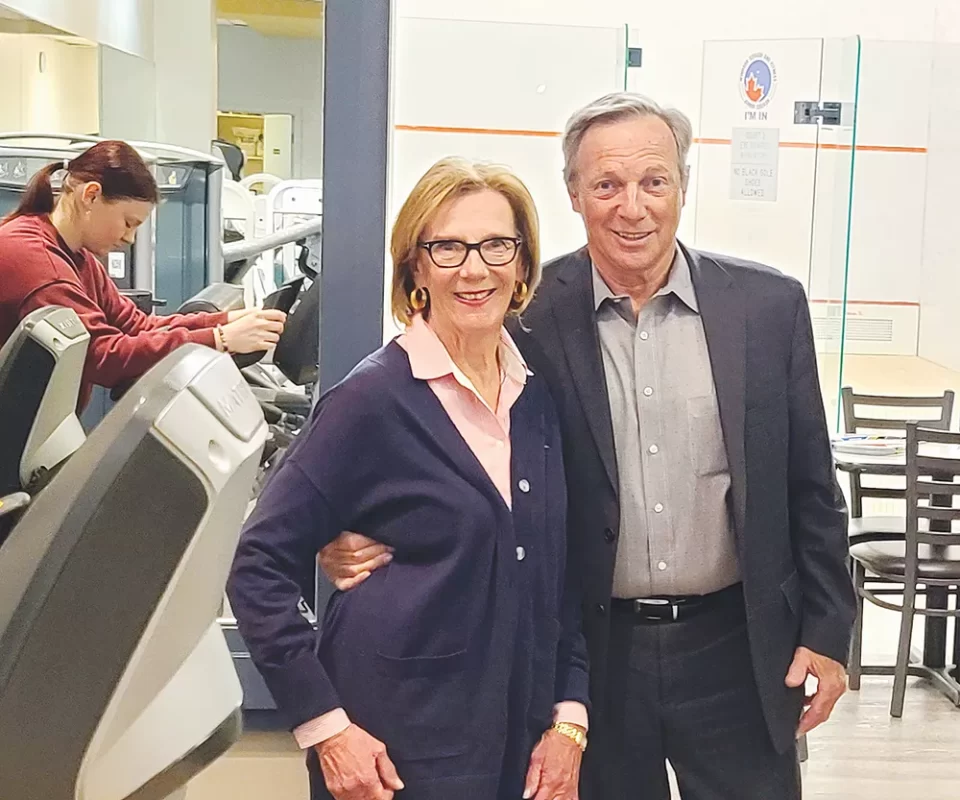
HAVE A CUP OF JOE WITH JOE – 2475 McDougall Street: 50 Years Of Health Care Services And 30 Years For Windsor Squash & Fitness Club
The property at 2475 McDougall Street — currently the site of Windsor Squash & Fitness Club and the Jackson Park Health Centre — has a 50 year footprint of services associated with health care.
It started in 1973 as a fitness and exercise business with Windsor Indoor Tennis. One of the original owners, Sam Tissot, informs me: “The other owner/partners were Gord Marsh, Paul Saddy, Ken Stewart and Dick Kaiser.” He continues by describing the facility as having “Four indoor tennis courts and some fitness equipment, and then in 1980, racquetball courts were added.”
In 1994 some of the original owners of Windsor Indoor Tennis were beginning to look towards retirement and to take on some new partners. That’s when Tom and Marcy Porter (Tomarcy Services Ltd.) became part owners and facility operators, and by the year 2000, they were the sole owners.
The ownership group also recognized that a major change was needed in 1994.
As Tom recalls: “The owners we’re looking for a way to make the tennis part of the building more profitable because tennis had been draining away over the years. When the pleasant weather came people stopped playing tennis indoors and went over to Jackson Park and other places to play outdoors.”
At the same time, the popular Wheels Roller Skating on Dougall Avenue was sold to become a bingo hall. But some of the Wheels’ owners still wanted a successful roller-skating business.
So, the two ownership groups met, negotiated, and formed a new partnership.
The 25,000 square foot tennis court building was converted into the highly popular Wheels, The Skatin’ Place and the children’s Hyper Space PLAYLAND.
The fitness club expanded to 24,000 square feet to include larger fitness areas, a doubles squash court, and five international single squash courts. Members could choose between squash, or an exciting game of racquetball called UK Racketball that is played on a regular squash court and is similar to squash. Windsor Indoor Tennis was rebranded as Windsor Squash & Fitness Club and is now in its 30th year of operation.
Six weeks before the official opening of the renovated facilities, a major fire shut down the squash and fitness facility and the roller-skating rink for almost nine months for repair and reconstruction. Both reopened in late 1995.
The new partnership arrangement worked out well. The squash and fitness club grew in membership. It was much more than just a gym.
“What gave us an edge is the club atmosphere,” says Marcy. “A lot of people came and worked out, then met with their friends here, had a drink and turned it into a social event.”
Reflecting on the successful co-joining of a roller-skate rink with the fitness facility, Tom adds: “There was a real synergy between the two areas. People could walk, run, or blade in the rink. We had ‘strollercize’ and seniors’ classes as well. Some people stopped and did weights to cross train.”
As parents raising a young family, Tom and Marcy benefitted from having part time jobs in the club readily available for their children Brian, David, Mark and Erin — and for their children’s many friends and the neighbour kids.
The Porter’s oldest son, Brian, managed the family business (both squash & the health club and the roller-skate rink) for 15 years. This gave him a solid foundation for his current successful career in the financial industry with TD Bank.
Youngest son, Mark, who learned the game of squash in his parent’s club is currently Assistant Athletic Director at The Toronto Lawn Tennis Club — one of the nation’s most prestigious and historic private clubs — where he has coached squash since 2011.
He had a successful collegiate career in squash at the University of Western Ontario and today is playing doubles on the Squash Doubles Association (SDA) Pro Tour, competing in events in Pittsburgh, Baltimore and Toronto.
After a successful 10 year run with Wheels, the Porters saw a declining interest and profitability in the roller-skating business.
“It was déjà vu all over again,” recalls Tom.
They looked for an alternative function for the building that would be compatible and complementary to the fitness club.
