
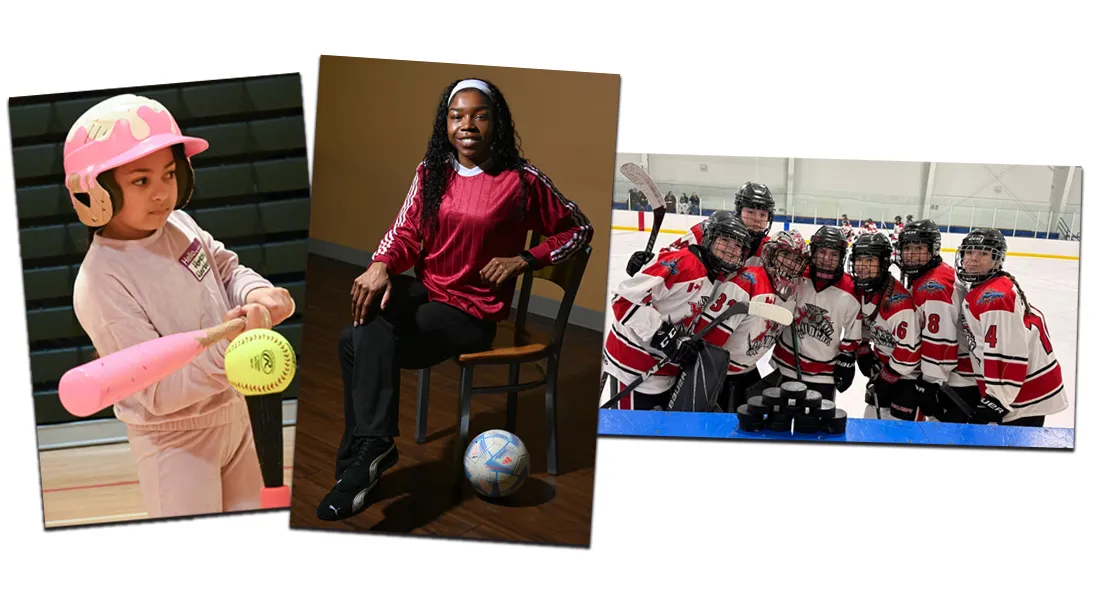
The Movement To Keep Girls In Sport And Create Lifelong Participation
Photos By Sanja Tabor, unless marked
To celebrate International Women’s Month in March, we drew inspiration from the 2026 theme — Give to Gain — as a reminder of the power of support, mentorship, and collaboration, especially when it
comes to sport. For trainers, coaches, and clubs who invest in the health and development of girls and women, the impact extends far beyond the field, rink, or gym.
Sports offer tremendous physical, mental, and social benefits, helping young people develop leadership, resilience, and strategic thinking. Many women credit their athletic background with providing the confidence and skills needed to shape a successful career and life.
Despite the benefits, participation rates among girls tend to decline with age. Girls step away from activities they once loved, with the drop-off becoming particularly noticeable in their teen years.
Data shows that factors like body image, lack of confidence, fatigue, injury, cost, and lack of inclusive environments are barriers to continued involvement. As a result, many young women miss out on the benefits of being active.
We reached out to local mentors, trainers, and coaches to learn how they are strengthening participation, improving retention, and working to create a lasting impact for girls and women in fitness and sport.

goes over drills with her students at the Windsor International Aquatic
and Training Centre, 401 Pitt Street West. Photo by Sanja Tabor.
Cross Border Swim Training
After coaching youth swimming for more than 35 years, Stacey Kane recognized an opportunity to specialize in training adults looking to excel in — or return to — the sport.
In the summer of 2025, she decided to exclusively coach Masters for swimmers 18 years and up and launched Cross Border Swim Training to accommodate her new students.
Along with training athletes for competition, the group also welcomes adults who want to stay active in a faster-paced environment. As the only Canadian-owned and operated U.S. Masters Swimming training group and team under Michigan Masters — and with the Windsor International Aquatic and Training Centre as her facility — Kane has attracted not just Ontario swimmers, but also Michigan athletes who prefer training in nearby Windsor over using school or community pools.
Kane competed in swimming in high school and then dived into teaching swimming and lifeguarding. She found that leading children (particularly teens) was something she really enjoyed. Eventually, after she graduated and ventured into life beyond school, she left swimming behind.
Many years later, when it was time to enroll her own children in a Learn to Swim program, she felt the need to get back into coaching.
As a certified Pilates instructor, Kane also began to include movement work into her training sessions. While the men initially thought it was an exercise just for the girls, they quickly realized the benefits and the impact it had on their training.
She had always noticed that the girls were dropping out faster than their male counterparts and returning to the sport revealed the same challenges in retaining young women.
Influences like anxiety, peer pressure, and social media all played a part in changing an athlete’s perspective. “Even pressure from their own teammates about how they look was a factor,” Kane adds.
It was imperative that she instilled a sense of belonging within her program, ensuring that all athletes felt they were welcome, especially the girls. When it was time to engage in difficult conversations, she knew
that her gender played an important role in creating a space for open conversations.
“I found that the female athletes wanted to talk more so I made it easy to talk about their concerns,” Kane mentions. “As a female coach dealing with females, we can be more empathetic and understanding because we have experienced the same thing with our own development, self-doubt, and changing bodies.” Even now training adults, Kane still emphasizes to the athletes that everyone will develop differently, especially since each has their own goals.
Some swimmers want to focus on a stroke or technique as they prepare for an upcoming competition, and others just want to prove something to themselves. It has become a busy and varied group with participants ranging in age from 18 to 80!
“I love that there’s this cross section and I’m just excited they want to get back into the water,” she expresses. Kane feels the next natural step is to get women back to coaching. Despite a lot of women competing in swimming, most coaches at the higher levels are men. Unfortunately, she has seen great women leave coaching due to burnout or because of how they were treated by their male counterparts.
“We need to support each other, and we need to support women coaches so we can keep them in the sport,” says Kane. “Seeing a woman coaching does a lot for the girls. It creates a space where the athletes feel supported and can build confidence. It’s also easier for them to envision themselves doing something like coaching in the future.”
Being a role model and creating an environment of inclusivity and growth where all of her athletes excel, is exactly why Kane remains committed to the sport: “I’m lucky to work with amazing athletes. I really love what I do.” Visit their website to learn more about training or getting back to the pool to improve your technique (you must be over 18).
Three additional organizations and one business share how they’re opening doors, building confidence, and changing the game for girls in sports: Windsor West Little League (Softball); Windsor City FC
(Soccer); Sam McIntosh (Personal Training & Yoga Instruction) and Sun Parlour Female Hockey Association . . .